
MANUFACTURE

Either your project’s service is a low- or high- volume production.

When manufacturing with us, it’s important to know which one of our services to choose from. This is determined through factors such as shape complexity, quantity and material.

The choice between high- and low- volume production affects costs, lead times, design flexibility and project success.

Read the descriptions below to decide what manufacturing service is for you;
MANUFACTURE

LOW VOLUME PRODUCTION

Low Volume Production

Low volume production refers to the manufacturing of a smaller batch of parts or components. At Multiply Supply, this includes production runs of fewer than 10,000 units. Low-volume manufacturing is specifically chosen for prototypes, limited edition products, or specialised components that do not require large-scale production. This service provides several advantages, particularly flexibility and customisation in your products.

Some of our services include:

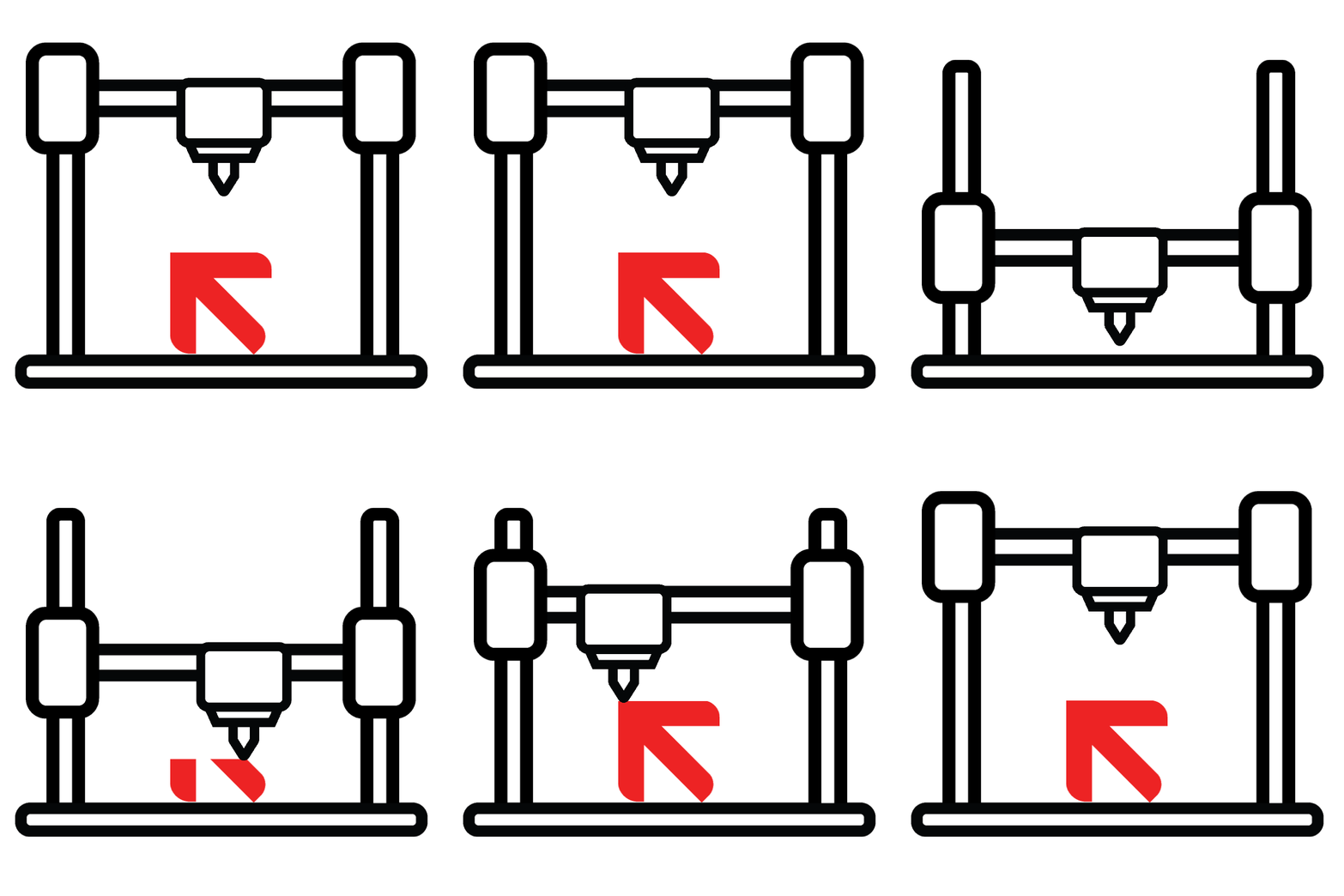
3D printing:

With 3D printing is ideal for startups, small businesses, and enterprises testing new products. It is also ideal during the prototyping phase for rapid iterations during the design process.

  • Rapid Prototyping: 3D printing is perfect for projects that need to iterate designs quickly, such as consumer electronics, automotive, and medical devices.
  • Cost and Time efficient: Complex geometries and intricate features can be produced without additional costs or time. This provides flexibility with exploration of innovative designs, optimise part performance, and unique features.

CNC Machine:

Computer numerical control (CNC) tools are subtractive manufacturing processes. CNC is a subtractive method of manufacturing using materials such as plastic, metal, or other materials.

  • Customisation: Low-volume production allows for flexibility to make bespoke CNC machined components tailored to specific customer needs.
  • Durability: Better for high-strength or simple parts.
  • High Precisions: Higher-volume, simple parts requiring high precision, tight tolerances, and superior material strength.

PCB Prototyping:

Low-volume PCB assembly is the manufacturing and assembly of small batches of printed circuit boards.
  • Customisation: Low-volume PCB assembly is ideal for reliability-driven or customised products such as industrial controls, medical devices, aerospace systems, and automation equipment.
  • Quick Iterations: Is ideal for flexibility for design changes, allowing layouts, components, and firmware to be refined between runs with minimal disruption.

HIGH VOLUME PRODUCTION

High Volume Production

High volume production involves manufacturing large quantities. In Multiply Supply, that start from the quantity of 10,000 units and scaling to hundreds of thousands of parts or components. This method is best suited to you if your products are steady, and high demand, such as automotive parts, consumer electronics enclosures, or PCB components. This method is ideal by its efficiency to produce large numbers of identical components with minimal variation.

Some of our services include:

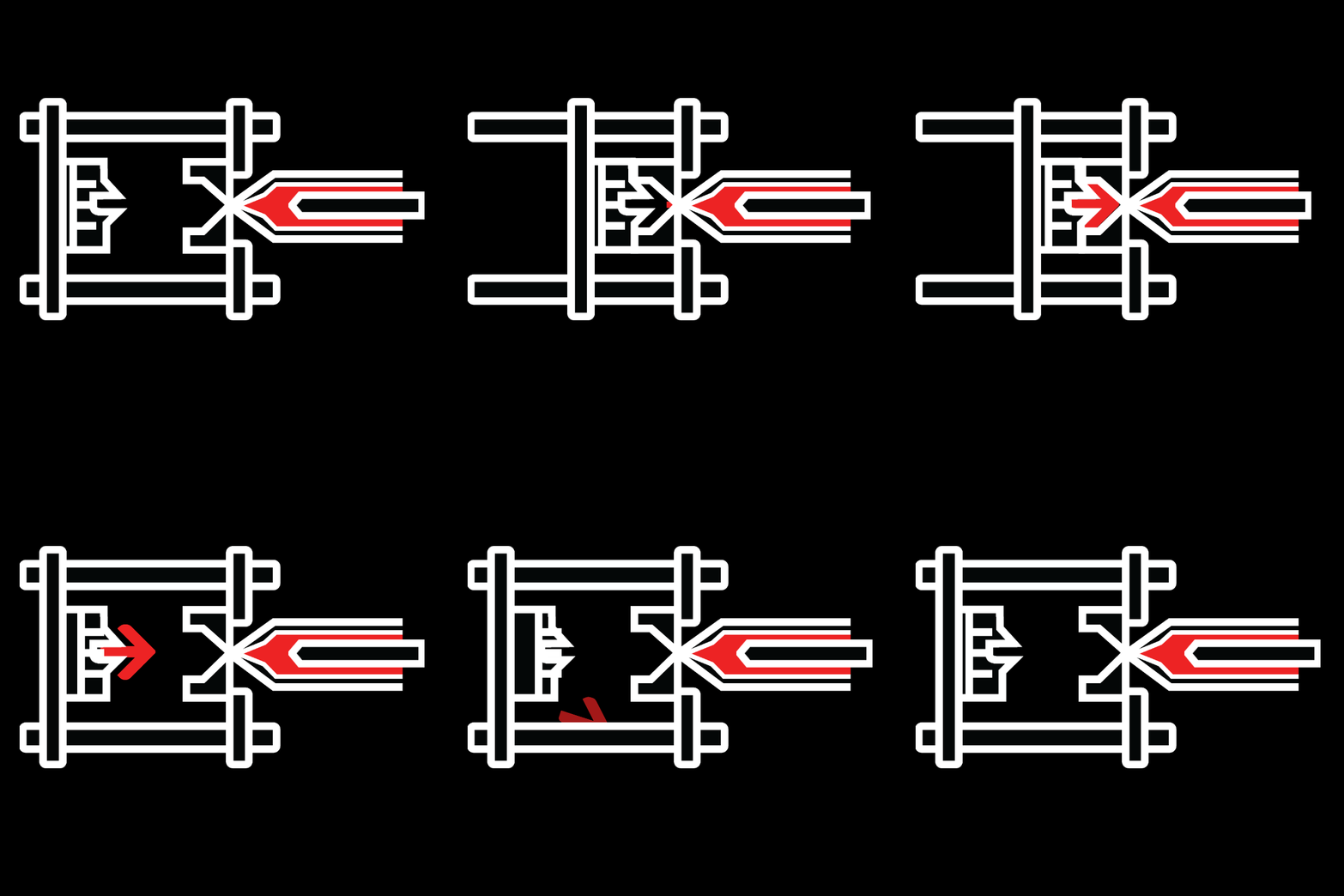
Injection Moulding:

Injection moulding is a widely used manufacturing process for producing high volumes of precision plastic components. Injection moulding is mostly used with thermoplastic and thermosetting polymers for this instance.

  • Low cost per part: For high output production runs the cost per part is very low.
  • Repeatability: You can manufacture identical products repeatedly. This is ideal when you need to have parts with high tolerances and reliability across high volumes.
  • High detail: The process involves presses the moulten plastic hard up against the moulds allowing complex and intricate shapes plus a lot of detail.

Die Casting:

Die casting is a metal casting process that uses metal dies to create metal parts. The die casting process is primarily used for casting non-ferrous metals, such as aluminium, magnesium, zinc and their alloys, but it can also be used for other metals with comparable melting points.

  • Complex Thin-walled Parts: Aluminium die casting can manufacture complex-shaped and light components but with an excellent strength-to-weight ratio.
  • High hardness and strength: Die casting produces parts with high durability and dimensional accuracy.

PCB Manufacturing:

High-volume PCB production are for mature products with stable demand. Examples include smartphones, televisions, and automotive electronics.


  • Production of High-Volume PCBs: The final stage of PCB manufacture before delivering to clients is high-volume printed circuit board fabrication. High numbers of PCB are produced by a linear process with no layout adjustments.
  • Large-Scale Assembly: It is crucial to know the sort of printed circuit board that is needed. Otherwise, there is a chance that there will be a lot of high-quality PCBs that do not satisfy the requirements of the electronics.